

Epoxy flooring contractors
Epoxy flooring contractors lay seamless two-part epoxy systems over prepared concrete in warehouses, workshops, showrooms and garages. Epoxy flooring is a seamless, hard-wearing resin surface created by applying a two-part epoxy system, usually over a prepared concrete slab. Epoxy resin flooring is the most widely used type of resin flooring in the UK, covering everything from factory and warehouse floors to showrooms, workshops and domestic garages. Specified and installed properly, an epoxy floor gives a dustproof, chemical-resistant, easy-clean surface that takes years of hard traffic.
Epoxy is the default resin in workshops, plant rooms and light manufacturing, so this sits alongside industrial flooring contractors and anti slip flooring contractors. All resin work is arranged through the same network of vetted resin flooring contractors.
Surface Specialists arranges epoxy flooring through our network of vetted specialist contractors. We match your project to the right epoxy system and the right contractor, the contractor surveys the site and installs the floor and you get a surface specified for the way your building actually works, not a one-size-fits-all coating.
What is epoxy flooring?
Epoxy flooring is a resin floor made from two components, a resin and a hardener, that react and cure into a rigid plastic bonded to the concrete beneath. Epoxy is one chemistry within the wider resin flooring family, alongside polyurethane and MMA. It is the default choice for dry interiors with heavy traffic because of the balance it strikes between durability, chemical resistance and cost.
If you are still researching how epoxy works and whether it suits your space, our guide to what epoxy flooring is covers the chemistry, the build-ups and the pros and cons in depth.
Where is epoxy flooring used?
Epoxy flooring is used wherever a concrete floor needs protecting from traffic, impact, chemicals and dust. It is one of the most common industrial floor finishes in the UK and one of the most popular upgrades for garages at home.
- Factories and industrial units. Forklift traffic, point loads and abrasion with systems built up to match the duty.
- Warehouses and distribution. Dustproof, line-marked floors that protect the slab and keep stock and handling equipment clean.
- Showrooms and retail. Seamless, decorative epoxy finishes that present well and cope with constant footfall.
- Workshops and vehicle areas. Oil, fuel and brake fluid wipe off a sealed epoxy surface instead of soaking into bare concrete.
- Garages at home. Epoxy and decorative flake coatings that turn a dusty slab into a clean, finished space.
Types of epoxy flooring system
Epoxy floor coatings
Two or three roller-applied coats building to around 1mm (see epoxy floor thickness for how depth is chosen). The right system for garages, workshops, storage areas and light industrial floors where the slab is in good condition and needs sealing and protecting rather than rebuilding.
Self-smoothing epoxy floors
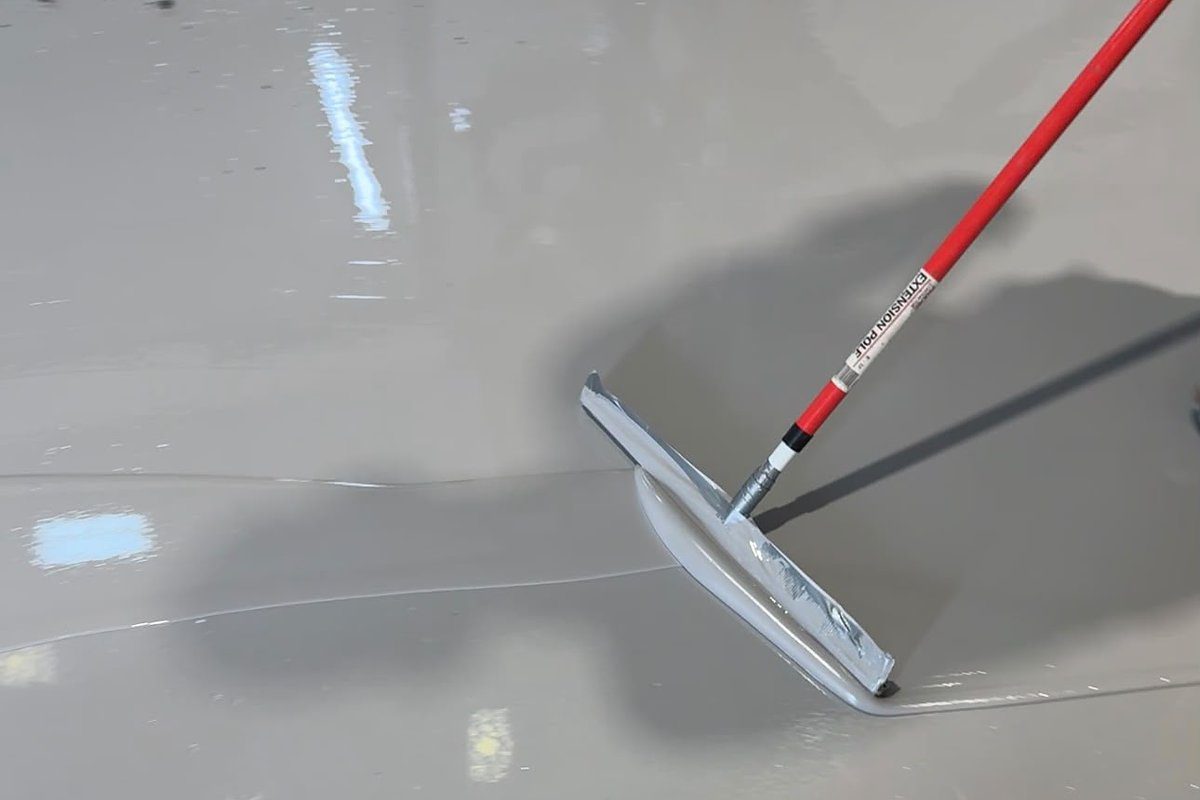
Poured and spread to a typical 2mm to 4mm, self-smoothing epoxy gives a dead-flat, seamless surface for production areas, warehouses and showrooms. It bridges minor imperfections in the slab and takes heavier traffic than a thin coating.
Decorative flake and quartz systems
Coloured flake or quartz aggregate broadcast into the epoxy gives a decorative, slip-resistant finish that hides dirt and wear. Popular in garages, showrooms and public areas. Our comparison of flake and quartz epoxy floors explains where each works best.
Anti-slip epoxy finishes
Aggregate broadcast between coats produces a textured, anti-slip floor for wet areas, ramps and entrances, graded to the level of slip resistance the space needs.
Is epoxy the right resin system?
Epoxy is the right choice for most dry, heavy-traffic interiors. It is not the answer everywhere: polyurethane and PU screeds take thermal shock, steam cleaning and aggressive wash-down that would crack an epoxy, which makes them the standard for food production and commercial kitchens and MMA cures in around an hour where downtime is the constraint. Our guide to epoxy vs polyurethane flooring sets out the differences and the survey confirms the right system for your site.
How an epoxy flooring contractor installs the floor
Preparation decides whether an epoxy floor lasts. The contractor diamond-grinds or shot-blasts the slab to a clean, keyed surface, repairs cracks and joints and moisture-tests the concrete before any resin goes down. Where the slab holds moisture, a liquid epoxy DPM seals it first, provided moisture readings sit within the limits the membrane manufacturer allows. Only then is the epoxy applied, coat by coat, to the specified build-up. See our concrete floor grinding page for how the preparation itself is done.
How much does epoxy flooring cost?
Epoxy flooring cost depends on the system build-up, the floor area and how much preparation the slab needs, which is why like-for-like quotes vary so much. Thin coatings sit at the lower end and self-smoothing and heavy-duty systems cost more per square metre. Our resin flooring cost guide gives realistic UK ranges and after a free site survey the contractor provides a written quotation for your actual floor.
Why choose Surface Specialists?
Epoxy flooring fails through poor specification and poor preparation more often than through poor materials. Surface Specialists exists to take that risk out: we vet the specialist contractors in our network, match your project to the contractor with the right systems and track record and stay your starting point from enquiry to survey. Across our contractor network there is more than twenty years of industry experience on the floors described on this page.
Areas we cover
We are based in the North West and cover Manchester, Liverpool, Chester, Cheshire, North Wales and the Wirral. Larger commercial and industrial epoxy projects are covered nationally through our contractor network. Contact us to confirm cover for your site.
Get a quote
Tell us about your project and we will arrange a free site survey with a specialist contractor. The contractor provides a written specification and quotation, typically within 48 hours. There is no obligation. Contact us to get started.
GET A FREE SITE SURVEY AND QUOTATION
Frequently asked questions
Is epoxy flooring the same as resin flooring?
Epoxy is one type of resin flooring. Resin flooring is the umbrella term covering epoxy, polyurethane and MMA systems. All epoxy floors are resin floors but not every resin floor is epoxy. Epoxy is the most common choice for dry interiors that take heavy traffic.
How long does an epoxy floor last?
A correctly specified and installed epoxy floor typically lasts ten to twenty years in commercial use and longer in a domestic garage. Lifespan depends mostly on the quality of the preparation and on matching the thickness of the system to the traffic it takes.
Is epoxy flooring slippery when wet?
Standard epoxy cures smooth and can be slippery when wet. Where entrances, ramps or wet processes are involved, an anti-slip finish is created by broadcasting aggregate into the surface. The right grade of slip resistance is confirmed at the site survey.
Can epoxy flooring be laid over old concrete?
Yes, provided the slab is sound and properly prepared. The contractor diamond-grinds the surface to remove laitance and old coatings and moisture-tests the slab. Where moisture is present, an epoxy DPM is applied first so the new floor cannot lift.
How thick is an epoxy floor?
Epoxy coatings run from a few hundred microns for a light-duty seal up to around 1mm. Self-smoothing epoxy floors are typically 2mm to 4mm and heavy-duty epoxy screeds thicker still. The right build-up depends on traffic, loads and how the floor is used day to day.
How long does epoxy flooring take to install?
A typical epoxy floor takes two to five days including preparation, depending on the area and the build-up. Standard epoxy takes around 24 to 48 hours before foot traffic and up to seven days for full chemical cure. Fast-cure systems shorten downtime where it matters.
Which areas do you cover?
We are based in the North West and cover Manchester, Liverpool, Chester, Cheshire, North Wales and the Wirral and we take on larger commercial projects nationally. Contact us to confirm cover for your site.